
Skin Tag Removal
Starting atQuick, targeted removal for bothersome skin tags. Final pricing is based on the number of tags and complexity of the areas treated.
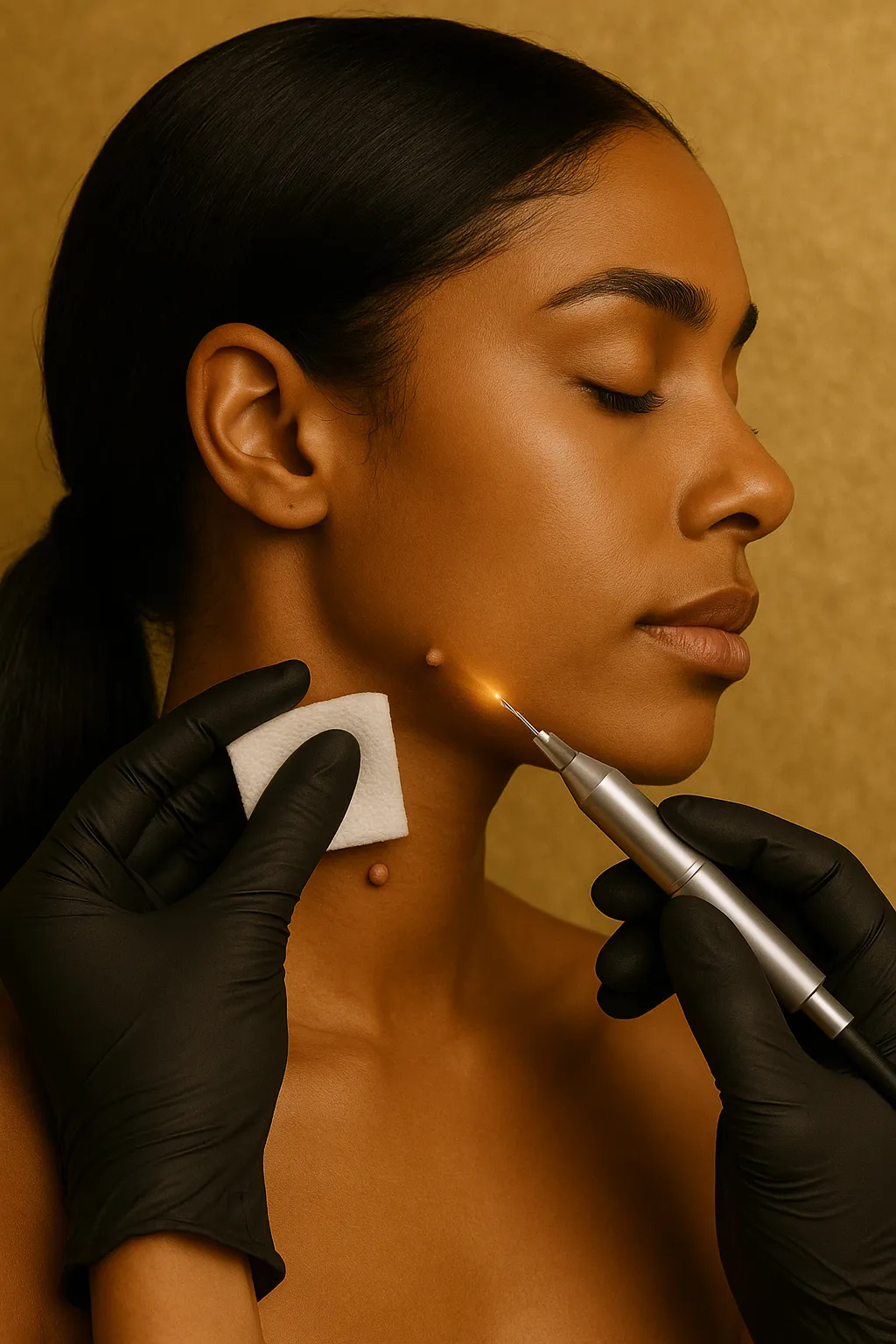
Skin tags are common, benign growths that can catch, rub, or become cosmetically distracting—especially around the neck, underarms, bra line, and other friction areas. Our approach focuses on careful assessment, comfort-first technique, and clean results. We’ll confirm suitability, select the most appropriate removal method for your skin and the tag’s location, and provide clear aftercare so healing stays smooth and low-maintenance.
Note: Please disclose any history of keloids (raised scarring), bleeding disorders, use of blood thinners, diabetes or impaired healing, current skin infections, recent sunburn, pregnancy/breastfeeding status, and any changing or suspicious lesions. Some lesions may require medical evaluation or referral if they do not appear consistent with a typical skin tag.
Pricing is typically based on the number of skin tags treated, their size, and the anatomical area. We’ll confirm candidacy and recommend the most appropriate removal approach during your visit.
Some lesions may require medical evaluation or referral if they do not appear consistent with a typical benign skin tag. If you are prone to keloids (raised scarring) or have impaired healing, please let us know before treatment.
Quick, targeted removal for bothersome skin tags. Final pricing is based on the number of tags and complexity of the areas treated.
Meet your provider, confirm candidacy, and get a clear plan for removal options and pricing.
Explore complementary options—or return to the parent category to compare treatments side-by-side.
Compare treatments side-by-side to find the best match for your skin goals, budget, and downtime preferences.
Compare all Skin Health servicesSkin tag removal is simple—but it should still be methodical. We prioritize lesion screening, appropriate technique selection, comfort-first execution, and practical aftercare guidance so your result looks clean and heals smoothly.
We confirm the lesion appears consistent with a benign skin tag and discuss any red flags that may require medical referral.
We select the removal approach based on location, size, and skin type—prioritizing precision and the lowest reasonable irritation.
We follow hygienic, professional standards with disinfected tools, protected surfaces, and careful handling to reduce infection risk.
You’ll leave with clear instructions for cleansing, protection, and what “normal healing” looks like—plus when to check back in.
Skin tag removal supports a smoother-looking surface and reduces snagging or irritation from benign, raised skin tags. Our approach is quick, precise, and planned for clean healing with clear aftercare.
Skin tags (acrochordons) are common, soft growths that often show up in friction areas like the neck, underarms, bra line, groin folds, and eyelid region. While they’re typically benign, they can become bothersome when they rub, snag on jewelry/clothing, or feel cosmetically distracting.
Your visit starts with a lesion check to confirm the area appears consistent with a typical skin tag. If anything looks atypical (rapid change, irregular pigment, bleeding, ulceration), we’ll recommend appropriate medical evaluation before proceeding.
Planning priorities: confirm candidacy, match technique to location/skin type, and use localized numbing when needed to keep the experience comfortable. We also plan around your healing profile (history of keloids, diabetes, blood thinners, etc.).
Outcome mindset: the goal is a clean removal with predictable healing. Mild redness or a small scab is common. We’ll give simple care steps to reduce irritation and support an even-looking finish as the area heals.
Use this quick guide to choose a sensible starting approach based on what’s bothering you most. We’ll confirm candidacy, review healing considerations, and recommend the best option for your location and skin type.
Please disclose blood thinners, bleeding disorders, diabetes or impaired healing, history of keloids (raised scarring), and any changing/suspicious lesions (rapid change, bleeding, irregular color) so we can confirm the safest plan.
A clean, same-visit option when a skin tag is rubbing or snagging. We assess the area, select the appropriate technique, and provide simple aftercare for smooth healing.
Skin tag removal is typically straightforward, but the best approach depends on location, number of tags, and your comfort/healing considerations. This comparison helps you choose a sensible starting plan—your provider will confirm candidacy and technique selection during your visit.
Book your visit and we’ll confirm candidacy, review comfort and healing considerations, and recommend the most conservative approach for your location and skin type—then provide simple aftercare guidance.
Notes: healing time and comfort vary by location, size, technique selection, skin type, and adherence to aftercare. If a lesion is changing, bleeding, irregular, or not consistent with a typical skin tag, medical evaluation may be recommended prior to treatment.
Skin tag removal is typically a single-visit procedure, followed by a short healing window as the treated area dries, flakes, and returns to a smooth finish. This timeline maps phases (how it looks/feels) with stages (how we structure follow-through).
Removal + early surface response
Stage 1 timeframe: Same-day to 72 hours
The tag is removed (method depends on size and location). The area may look slightly pink or feel tender. Expected: mild redness, a small superficial wound, and a protective dry-down beginning.
Keep the area clean and protected as directed. Avoid picking, friction, and aggressive actives on the site during the first few days.
Dry-down, flaking, and surface smoothing
Stages 2–3 timeframe: Week 1–2 (dry-down) then Weeks 2–6 (surface normalization)
The treated spot typically dries and forms a small scab or crust. Expected: flaking/shedding as the surface resolves; keep it moisturized/protected per guidance.
Skin texture continues to smooth as the site settles. Expected: redness fades; mild temporary pigment changes can occur depending on skin type and location.
This phase is mostly about letting the skin do its job. Avoid picking and minimize friction (necklines, jewelry, bras) to reduce irritation.
Final tone settling + follow-up if needed
Stage 4 timeframe: Weeks 6–8+ (final polish window)
The area typically reaches its most “finished” look. Expected: tone continues to normalize; if any residual tissue remains (larger tags), a brief follow-up can be considered.
If you’re prone to skin tags, we can discuss friction and irritation triggers. For any changing or concerning lesions, we will recommend appropriate medical evaluation.
Notes: healing speed varies by location (neck, underarms, bra line), tag size, skin type, and aftercare adherence. Avoid picking, excessive friction, and unapproved “at-home acids” on the treated area. If you notice increasing pain, swelling, warmth, drainage, or spreading redness, contact your provider.
Skin tag removal focuses on comfort, cosmetic preference, and friction relief—typically completed in a single visit. We assess location, size, and skin type to select an approach that supports a clean finish and predictable healing.
Most clients choose removal for comfort, appearance, or irritation from daily friction. The grid below reflects typical planning goals.
Best next step: if you have multiple tags or clustered areas, we’ll confirm the safest plan for each zone and advise whether staging (multiple visits) is appropriate for comfort and healing.
Skin tag removal is typically a quick in-office visit designed to support comfort and a clean cosmetic finish. Healing is usually straightforward, but aftercare and sun protection matter—especially in high-friction areas.
We first confirm the spot appears consistent with a benign skin tag, then select a removal method appropriate for the size and location. Most clients experience a quick treatment and return to normal routines immediately.
Preparation is simple. The main goal is to reduce irritation risk and help us assess the area clearly—especially in high-friction zones.
Aftercare is designed to support clean healing and minimize irritation. We’ll confirm product use and bandage guidance based on the method used and the location treated.
We do not “remove everything.” If a lesion does not look like a typical skin tag, we may recommend medical evaluation prior to treatment.
Skin tag removal is often one part of a broader “skin polish” plan. These related options are available at Euphoria and are commonly explored based on goals like smoother texture, clearer pores, and an overall more refined finish. We’ll advise on safe sequencing.
Great for ongoing maintenance—cleansing, hydration, and a refreshed, healthy-looking glow on a consistent cadence.
Dermaplaning & MicrodermabrasionTexture-forward options for smoother-looking skin and a more polished finish—ideal when visible buildup is a priority.
Chemical PeelsControlled resurfacing to support tone and texture goals. Peel strength and timing are selected conservatively to protect the barrier.
MicroneedlingCommonly explored for texture refinement and skin quality support. We’ll advise on spacing and pairing based on sensitivity and goals.
IPLOften selected for visible redness and uneven tone. Suitability depends on skin type, sun exposure, and target concern.
RF Skin TighteningWhen firmness is a priority, RF can support a tighter-looking finish over time. Sequencing is planned around your comfort and timeline.
Consultation-first guidance—clear answers, conservative planning, and natural results.
If you’re deciding between options, we’ll help you choose the right starting point and timing.
Call (727) 244-9032Quick, clear answers about skin tag removal—what we treat, comfort, healing, aftercare, and when medical evaluation is recommended first.
A skin tag (acrochordon) is a small, soft, benign growth that often appears in areas of friction such as the neck, underarms, bra line, groin folds, eyelids, or under the breasts. They are usually harmless, but can be bothersome cosmetically or get irritated by clothing or shaving.
Removal method depends on size, location, and skin sensitivity. Options may include a quick precision removal technique (for example, controlled cautery or mechanical removal) with appropriate cleansing and aftercare guidance. Your provider will select the safest approach for a clean cosmetic finish.
Most clients describe it as quick and tolerable. Depending on the area (and your sensitivity), we may use a topical or local numbing step. You may feel brief warmth, pressure, or a quick pinch, then it’s typically done.
It depends on the number, size, and locations. Many clients address multiple skin tags in one visit, but we may recommend staging treatment if the area is high-friction or if there are many spots to treat safely.
Downtime is usually minimal. It’s common to have mild redness right after, followed by a small dry-down or scab. Most areas heal uneventfully with basic care. We’ll guide you on what’s normal based on your treatment area.
In most cases, yes—with common-sense care. You can usually shower the same day, but avoid soaking, heavy sweating, or friction directly over the area for the first 24–48 hours (or per your provider’s instructions). If treated on the face, makeup may be okay once the area is calm and dry (we’ll advise based on location).
Most sites heal with a clean cosmetic result, but any skin procedure can leave temporary discoloration or a small mark—especially in high-friction areas or for clients prone to hyperpigmentation or keloids. We plan conservatively and provide aftercare guidance to support the best finish.
A removed skin tag typically does not “regrow,” but new ones can form over time—especially in areas of friction. If you’re prone to them, periodic maintenance removal is common.
If a lesion is changing, irregular, pigmented, painful, ulcerated, or bleeding without clear friction, we may recommend evaluation first. We do not remove lesions that look atypical without appropriate guidance.
We screen for safety and may modify or postpone treatment for certain situations. Please disclose:
We generally advise against DIY removal. At-home acids, freezing kits, or cutting/tie-off methods can increase the risk of infection, bleeding, irritation, scarring, or treating something that should be evaluated medically. In-office removal is controlled, hygienic, and designed for a clean cosmetic result.
Pricing depends on the number of tags, size, and locations. We’ll confirm a clear plan at your visit before proceeding.
You can book online or call us. We ask for at least 24 hours’ notice for cancellations or rescheduling. Appointments changed with less than one day’s notice may be subject to a $50 fee.