
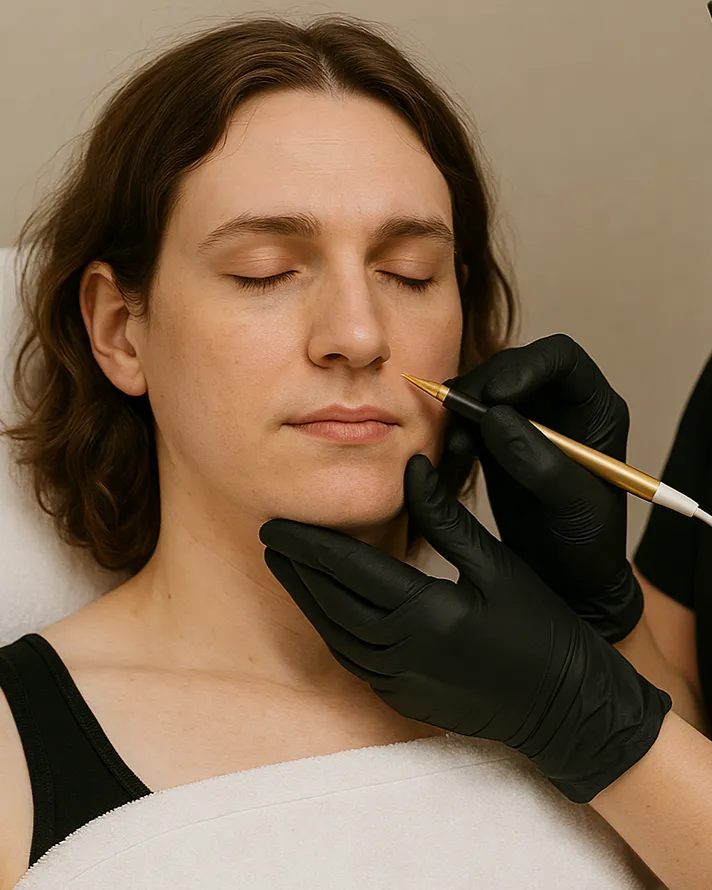
Pre- & Post-Operative Hair Removal
You’ll book your first session after checkout.
Call (727) 244-9032 to book your first session.

Certain medical and surgical plans call for permanent hair removal in sensitive or highly specific areas. These visits require a higher level of privacy, technical precision, and communication. Specialty Care Hair Removal is designed to meet those needs—providing clinically guided treatment in a calm, professional environment where care planning and comfort come first.
Note: Specialty care plans vary by goals, treatment area, and candidacy. We’ll confirm the best approach, pacing, and pre/post-care during your consultation. Results and session counts vary based on hair cycle, prior hair removal history, hormonal factors, and consistency of visits.
Specialty Care Hair Removal pricing is typically based on visit length, treatment area, and the level of technical planning required for your goals (privacy-focused care, sensitive skin, hormonal-pattern growth, and/or high-precision zones). We’ll confirm candidacy, recommend the best approach, and map a realistic schedule based on growth cycles and clearance goals.
For best results, arrive with clean skin and avoid tweezing, waxing, or threading beforehand, which can disrupt the follicle and affect planning. Shaving or trimming is usually preferred depending on the area and modality. Please disclose isotretinoin history, active skin irritation/infection, recent sun exposure, and any tendency toward keloids or pigment changes so we can tailor settings and aftercare.
Explore complementary options—or return to the parent category to compare treatments side-by-side.
Compare treatments side-by-side to find the best match for your skin goals and downtime preferences.
Compare all Skin Health servicesSpecialty care hair removal often involves sensitive areas, higher precision, or unique goals. We prioritize respectful communication, candidacy screening, conservative settings, and practical prep/aftercare guidance so you can progress safely and consistently.
We lead with discretion and comfort—clear communication, boundary-respectful draping, and a calm, professional environment.
We review hair/skin profile, history, and goals to choose the best approach and pace visits around growth cycles and clearance targets.
Settings and technique are tailored to reduce irritation—especially for sensitive skin, pigment-prone skin, and high-friction zones.
You’ll get straightforward guidance on what to avoid, what’s normal after treatment, and how to protect the skin between visits.
Some surgical and medical plans require permanent hair removal in specific areas prior to an operation to reduce post-operative complications and support long-term outcomes. Specialty Care Hair Removal supports patients who need pre-operative hair clearance—with planning guided by surgeon-provided timelines and treatment parameters.
Specialty care focuses on individualized planning for treatment areas that are sensitive, highly specific, or clinically time-sensitive. Your visit begins with a skin and hair assessment to confirm candidacy and map a realistic clearance schedule. When applicable, we can align the plan to surgeon-provided instructions for treatment location, hair-growth visibility, and timing prior to a procedure.
Because hair grows in cycles, pre-operative clearance is typically a series-based process. Consistent scheduling helps ensure we can treat follicles during active growth and progress steadily toward the clearance goal within the timeframe you’ve been given.
Planning priorities: protect the skin barrier, use conservative technique in pigment-prone or friction-prone zones, and maintain a calm, private experience with clear communication throughout. We also review contraindications and risk factors (recent isotretinoin history, active skin infections/irritation, tendency toward keloids, etc.).
Outcome mindset: expect progressive clearance—cleaner skin between sessions, longer intervals of regrowth, and more predictable maintenance as visits stay consistent. Temporary redness, swelling, or pinpoint scabbing can occur and typically resolves with proper aftercare.
When a surgical plan requests hair reduction or permanent removal within a defined treatment field, we provide discreet, protocol-aligned care designed to support comfort, hygiene, and confidence—before and after surgery, when clinically appropriate.
Note: Timing and suitability are individualized and guided by your surgical protocol. We do not treat over open wounds, active infection, or compromised skin integrity. If you are unsure whether an area is healed and ready, we recommend confirming clearance with your surgical team before scheduling post-operative treatment.
Use this quick guide to choose a sensible starting plan based on your main goal. We’ll confirm candidacy, customize your approach, and map a visit cadence that supports steady progress—especially for sensitive, high-privacy, or timeline-driven needs.
Planning is most predictable when follicles are intact. Avoid tweezing, waxing, or threading beforehand (it disrupts follicles). Shaving/trimming is typically preferred by area. Disclose isotretinoin history, active skin infections/irritation, and any tendency to form keloids so we can confirm the safest plan.
Begin with a consult-first plan and a single priority area to establish comfort, technique, and cadence. We’ll then expand strategically based on your timeline, skin response, and clearance goals.
Specialty care often benefits from choosing the right method for the job: laser can reduce hair efficiently in larger areas, while electrolysis is used for permanent precision—especially for lighter hairs, detailed zones, and timeline-driven clearance.
We’ll confirm candidacy, review the target area(s), and recommend a plan that fits your goals and timeline— electrolysis, laser, or a combined strategy for the most complete result.
*Results and comfort vary by skin type, hair color, hormonal factors, and the area treated. Avoid waxing/plucking when actively pursuing laser or electrolysis goals, as it disrupts the follicle and complicates planning.
Specialty Care Hair Removal is typically series-based because hair grows in cycles and precision areas often benefit from structured pacing. This timeline maps phases (how outcomes build) with stages (how we structure clearances, finishing work, and maintenance).
Comfort-first start + skin response baseline
Stage 1 timeframe: Same-day to 48 hours
We confirm how your skin responds and set a comfort-first approach (communication, pacing, and conservative technique in sensitive zones). Goal: clean aftercare + calm healing so future sessions stay predictable.
Mild redness, warmth, or tenderness can be normal depending on method and area. We’ll outline what to avoid (heat, friction, picking) and what supports calm recovery.
Repeat clearances + measurable reduction in daily maintenance
Stages 2–3 timeframe: Weeks 1–4 (establish cadence) then Months 2–12 (cycle coverage + refinement)
Early visits are structured to create a clean baseline and reduce “day-to-day” upkeep. Goal: consistent comfort + fewer touch-ups between sessions.
As more follicles become treatable across cycles, density and regrowth patterns improve. Goal: steady progress with technique choices that protect the skin barrier in sensitive or friction-prone zones.
Expect “less to treat” over time—slower regrowth, reduced density, and more predictable maintenance. Areas influenced by hormones or prior plucking/waxing may require a longer runway.
Finish work, long-term stability, and maintenance planning
Stage 4 timeframe: Months 12+ (finish + maintenance as needed)
Remaining hairs are typically finer and more sporadic. We focus on precision and long-term stability. Goal: a “finished” result in the target area with realistic expectations for any hormonally driven new growth.
Once goals are achieved, maintenance is typically minimal and customized. We’ll also help you plan around events and milestones so the cadence stays realistic and skin-first.
Notes: timelines vary by method used (laser vs electrolysis vs combined), area size, density, prior hair-removal history (tweezing/waxing), skin sensitivity, and hormonal influences. Consistency is the lever that drives results. Avoid waxing/plucking while actively pursuing follicle-based outcomes; shaving/trimming is typically acceptable. If you notice increasing pain, swelling, warmth, drainage, or spreading redness after treatment, contact your provider.
Specialty Care Hair Removal is built for situations where privacy, precision, and timing matter. Whether you’re targeting technically detailed areas or working toward a pre-procedure clearance goal, we tailor the plan to your hair/skin profile and the cadence needed for steady, predictable progress.
Specialty care focuses on areas and scenarios that benefit from a more structured plan—often with higher sensitivity, higher visibility, or a timeline that needs to stay on track.
Best next step: bring any procedure timelines or provider instructions you’ve been given (if applicable). We’ll confirm candidacy, map a practical visit cadence, and set expectations for progress based on area size, density, and hair-growth cycles.
Specialty Care Hair Removal is designed for areas where privacy, precision, and skin-first technique matter. Care focuses on keeping skin calm, avoiding follicle disruption between visits, and following a consistent cadence so we can build clearances and refinement comfortably over time.
Specialty care begins with a consult-first assessment: goals, area sensitivity, hair/skin profile, and any history of irritation or pigment changes. Sessions are paced for comfort and precision, especially in sensitive or highly visible zones.
Preparation depends on the method used (laser, electrolysis, or a combined plan). The priority is avoiding skin irritation and avoiding anything that disrupts the follicle when follicle-based methods are part of your series.
Aftercare is simple: keep the area clean, calm, and protected. Sensitive or friction-prone zones (inner thigh/bikini, underarms, face) benefit most from gentle routines and avoiding heat and rubbing for a short window.
Specialty care is built around risk reduction: hygienic technique, conservative settings in pigment-prone areas, and pacing that respects skin healing. If you have a history of hyperpigmentation or keloids, we tailor technique and aftercare accordingly.
Consultation-first guidance—clear answers, conservative planning, and natural results.
If you’re deciding between options, we’ll help you choose the right starting point and timing.
Call (727) 244-9032Pre- and post-operative coordination, inclusive and discreet care, what we can treat (and what we cannot), and how to plan hair removal within a defined treatment field.